
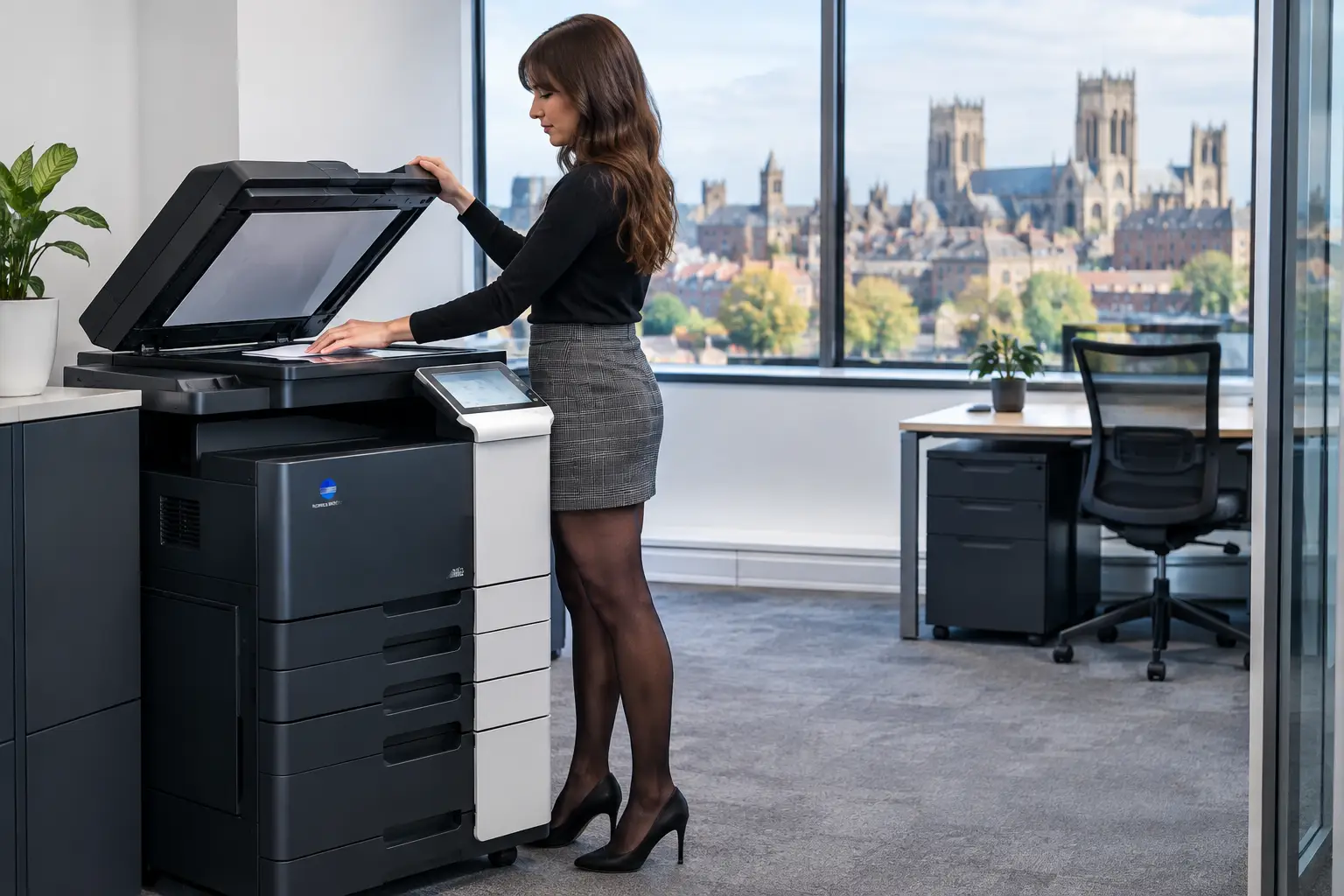
A supplier invoice buried in an in-tray, a signed form waiting to be filed, or a customer record held in the wrong department can all create unnecessary delay. Document scanning turns these paper-based hold-ups into usable digital information, but the real value comes from designing a process that gives the right people secure access at the right point in their work.
For many organisations, scanning starts as a way to reduce filing cabinets. It soon becomes a wider operational decision. When documents are captured accurately, named consistently and sent to the correct business system, teams spend less time searching, rekeying and chasing paper. Finance can process invoices faster, HR can manage employee records more carefully, and customer-facing teams can respond with better information to hand.
Document scanning is a workflow, not just a device feature
Most multifunction devices can scan to email or a network folder. That is useful for occasional documents, but it rarely provides the control needed for a busy office. A shared inbox soon fills with attachments, staff create their own filing habits, and no one can be certain whether a sensitive document has reached the right location.
A considered scanning workflow connects the device, the capture method, the destination and the rules around access. It should define what happens from the moment a document is placed in the feeder to the point it is stored, approved or acted on. This avoids treating scanning as an isolated function of a photocopier and instead makes it part of the organisation's document management approach.
The appropriate setup depends on the volume and type of paperwork. A small office may need secure scan-to-folder functions with clear naming conventions. An accounts team handling large numbers of invoices may benefit from automated classification, optical character recognition and routing into an accounts system. A school, healthcare provider or professional services firm may place greater emphasis on permissions, audit trails and retention rules.
Start with the processes that create the most friction
The best place to begin is not with a specification for a scanner. Begin with the documents that repeatedly slow people down. Ask where paper arrives, who needs to use it, how often it is copied or moved, and what happens when it cannot be found.
Invoice handling is a common example. Paper invoices may arrive by post, sit waiting for approval, and then be entered manually into finance software. A scanning workflow can capture the invoice at arrival, read key information, direct it to the appropriate approval route and retain a searchable copy. This does not remove the need for sensible checks, but it can reduce the routine handling that adds little value.
Other suitable processes include delivery notes, job sheets, employee forms, client correspondence, contracts and site reports. Prioritise work where delays are frequent, information is needed by several people, or a missing document creates a compliance risk. Starting with one well-defined process also makes it easier to test user adoption before extending the approach across the business.
Map the destination before you scan
Every scan needs a clear destination. Sending everything to email may feel familiar, yet it can create security and version-control problems. Documents often become detached from the system where they are needed, then remain in individual inboxes with limited visibility for colleagues.
Depending on the workflow, the destination might be a controlled network folder, a cloud document platform, a line-of-business application or a document management system. The key question is whether the destination allows authorised users to find, use and retain the information appropriately.
It is also worth agreeing practical file names and indexing fields. A document labelled only as “scan001” is no more useful than an unlabelled paper file. Consistent references such as supplier name, invoice number, customer account, project code or document date make search dependable and reduce duplication.
Capture quality determines whether information is usable
A poor scan simply creates a poor digital copy. Skewed pages, missing reverse sides, faint text and oversized files create work later, particularly when documents need to be searched, audited or shared.
The right capture settings should reflect the source material. Standard office paperwork may need straightforward black-and-white or colour settings, while signed agreements, plans or identification documents may require higher resolution and colour capture. Automatic document feeders save time for batches, but staff still need a process for staples, folded pages, receipts and delicate originals.
Optical character recognition, often shortened to OCR, is particularly valuable where users need to search within documents or extract information. Its accuracy depends on the quality of the original and the scan. Clear, well-maintained devices and appropriate settings make a meaningful difference. For critical data, build in validation rather than assuming every extracted field is correct.
Keep document scanning secure from the outset
Paper can feel familiar, but it is difficult to control once it leaves a desk. Digital documents can offer better oversight, provided access and device security are designed properly.
Secure scanning should consider who can use the device, where files are sent, who can open them and how activity is recorded. User authentication at the multifunction device can prevent unauthorised use and associate scans with an individual user. Role-based access can then limit sensitive files to the people who have a legitimate reason to view them.
For organisations handling personal, financial or commercially sensitive information, scanning should also sit within wider retention and data protection policies. Storing everything indefinitely is not good records management. Teams need agreed rules for retaining, reviewing and disposing of documents, whether they began on paper or were created digitally.
Network configuration matters too. A device that scans to a shared folder or cloud service is part of the IT environment, not a standalone office appliance. Regular updates, monitored connectivity and sensible permissions help reduce avoidable risk.
Make the process easy enough for people to follow
A technically capable workflow will not deliver much if staff find it confusing. If scanning a document requires several manual choices, people may revert to email, local saving or keeping the paper “just in case”. The process needs to match the pace of the work.
Preconfigured one-touch scan buttons can help by presenting common destinations or workflows directly on the device screen. A receptionist might select “customer correspondence”; a warehouse colleague might select “delivery notes”; an accounts user might select “invoices”. The goal is not to add options, but to remove unnecessary decisions while retaining the necessary controls.
Training should be practical and role-specific. Staff need to know how to prepare documents, choose the correct workflow, check that a scan has completed and deal with exceptions. They also need a clear route for support when a document will not scan, route or index as expected. Small issues resolved quickly prevent people from losing confidence in the process.
Bring scanning into a managed print environment
Scanning is often overlooked when organisations review their print fleet. Yet the same devices, users, networks and support arrangements are involved. A fleet assessment can identify whether devices are placed where documents enter the business, whether capacity matches demand and whether older equipment is creating delays or quality issues.
Managed support provides visibility beyond toner levels and printer uptime. It can include reviewing device use, applying security settings, monitoring faults and helping to align multifunction devices with changing workflows. This is particularly useful where IT teams have responsibility for many competing systems and office managers are left to deal with everyday device problems.
HAD-COPY approaches scanning as part of the wider workplace technology environment: the device, cloud or on-premise platform, workflow software, user access and ongoing support all need to work together. That integrated view is more likely to produce lasting operational improvement than adding another standalone scanner to an already fragmented setup.
Measure the improvement that matters
The clearest signs of a successful scanning project are usually practical. Documents are easier to find, approval queues move more quickly, and staff spend less time handling the same piece of paper more than once. Teams should also be able to identify where a document is in its journey, rather than relying on memory or a physical tray.
Set a baseline before changing the process. This could include the time taken to process an invoice, the number of missing documents, the volume of paper stored off-site, or the number of enquiries that require someone to search a filing cabinet. Reviewing these measures after implementation gives decision-makers evidence of what has changed and where further refinement is needed.
Document scanning works best when it removes a real point of friction without making everyday work harder. Start with the paper that holds people up most often, give it a secure and useful destination, and build a process that staff can trust enough to use every day.


