
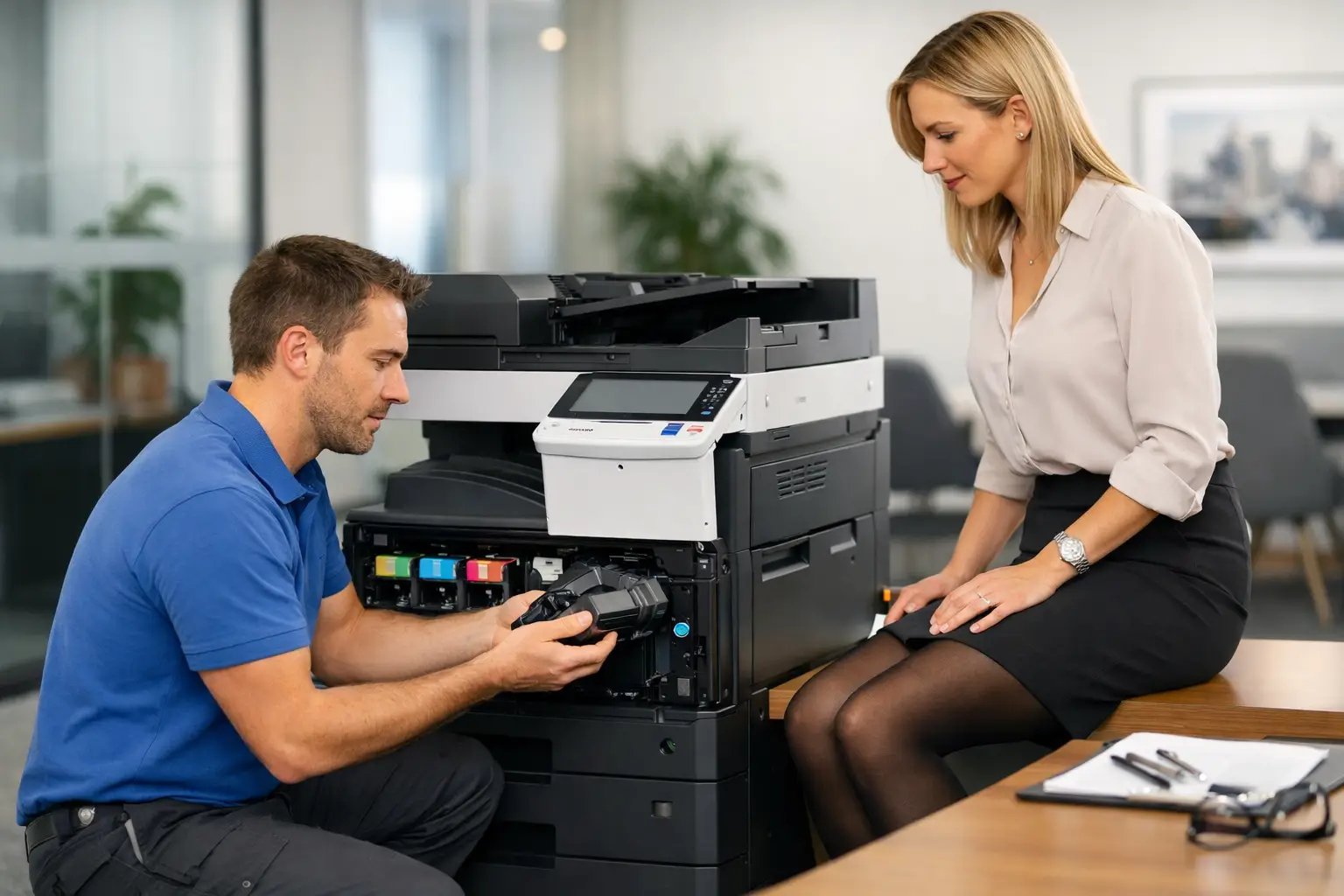
A printer that stops working at 10am can quickly become an operational problem rather than a minor IT fault. Purchase orders wait to be printed, scanned documents sit in queues, reception teams cannot copy identification, and staff lose time trying to find an alternative device. A well-designed printer maintenance contract gives your organisation a defined response when this happens, while bringing day-to-day costs and responsibilities under control.
For office managers, IT teams and finance leaders, the aim is not simply to keep a machine running. It is to keep document processes available, secure and predictable. The right agreement should support the full print environment: devices, consumables, users, security settings and the workflows that depend on them.
Why maintenance is more than a repair service
Many businesses still treat printer maintenance as a call-out arrangement. A device fails, someone contacts an engineer, and an invoice follows. This can appear cheaper when a fleet is small or lightly used, but it makes spending difficult to forecast and often leaves important preventative work undone.
A maintenance agreement changes the approach from reactive repair to managed availability. Regular monitoring can identify low toner, warning codes and declining component performance before they interrupt the working day. Scheduled servicing reduces wear on high-use devices, while agreed service levels set expectations for response and repair.
This matters most where printing, copying and scanning are part of a business-critical process. A legal practice producing case bundles, a school managing safeguarding paperwork, or a warehouse printing dispatch documentation will all have different priorities. The contract should reflect the cost of downtime in that setting, rather than offering a generic level of cover.
It also helps to separate device maintenance from broader print management. A repair-only agreement may restore a faulty printer, but it will not necessarily show where pages are being wasted, whether documents are printed securely, or whether the fleet is the right size. Organisations seeking tighter cost control usually benefit from an agreement that combines support with usage visibility and practical recommendations.
What a printer maintenance contract should include
The wording of contracts varies, so avoid assuming that the phrase ‘fully maintained’ means every issue is covered. Ask for a clear schedule of inclusions, exclusions and responsibilities before comparing monthly charges.
A useful agreement will normally cover labour, replacement parts caused by normal wear, preventative servicing and access to technical support. It should state whether toner is included, how supplies are ordered or replenished, and whether staples, drums, fusers and other consumable components are treated separately. On multifunction devices, the agreement should also clarify support for copying, scanning, finishing units and document feeder faults.
For most organisations, the following areas deserve specific attention:
- Service levels: the target response time, support hours, engineer attendance arrangements and what happens if the device cannot be repaired promptly.
- Parts and labour: which faults and components are included, plus any exclusions for accidental damage, misuse or unauthorised repairs.
- Consumables: whether toner and other items are supplied, the ordering process, delivery times and rules around non-approved supplies.
- Remote monitoring: how meter readings, toner levels and device alerts are collected, and whether this reduces the need for manual administration.
- Replacement provision: whether a loan device, temporary replacement or alternative print capacity is available during a major repair.
- Reporting: the print volumes, costs, service incidents and improvement opportunities that will be reviewed with your team.
Not every business needs every element. A small office with one dependable desktop printer may prefer a straightforward support arrangement. A multi-site organisation with multifunction devices, cloud printing and confidential documents will need clearer service commitments, remote management and stronger security provisions.
Set service levels around business impact
A four-hour response target sounds reassuring, but it does not always mean the device will be operational within four hours. It may mean an engineer will begin investigating the fault remotely or attend site within that period. Ask whether the agreement distinguishes between response, attendance and fix times.
Think about your real priorities. If a device is a single point of failure for invoicing, despatch or front-of-house work, a faster service level or a replacement plan may be justified. If there are several nearby devices with spare capacity, a next-business-day response may be entirely reasonable and more cost-effective.
The same principle applies across a fleet. A well-planned environment usually has a mix of devices, with more resilient support around high-volume or business-critical equipment. This is more practical than paying premium cover for every small printer, including devices that are rarely used.
Understand the commercial model before comparing prices
Maintenance contracts are often priced as a fixed monthly charge, a cost per printed page, or a combination of both. A low headline rate can be misleading if it excludes commonly replaced parts, delivery, colour pages or call-outs outside standard hours.
Cost-per-page arrangements can make budgeting easier because toner, maintenance and servicing are often combined into one agreed rate. They work particularly well where monthly volumes are reasonably stable and meter readings can be collected automatically. However, check minimum volume commitments and whether unused pages roll over. A business with highly seasonal printing may need more flexibility than a standard package provides.
Ask to see the difference between mono and colour pricing, A4 and A3 charges, and costs for specialist media or finishing. It is also worth confirming how scanning is treated. Scanning does not consume toner, but it relies on the same device hardware and may be central to your workflow.
Contract length deserves the same scrutiny. A longer term can provide price stability and support investment in better equipment, but it should not lock you into an unsuitable fleet. Look for sensible review points, clear upgrade options and transparent terms for changes in headcount, sites or printing volumes.
Include security and user support in the discussion
Printers are networked devices that process sensitive information. A maintenance agreement should sit alongside your IT security policy, not outside it. Engineer access, firmware updates, administrator credentials and the handling of stored data all need clear controls.
For organisations printing confidential HR, financial, legal or customer documents, secure print release can be particularly valuable. Users authenticate at the device before their job is released, reducing the chance of paperwork being left in output trays. Audit trails can also provide better visibility of usage and help investigate unexpected activity.
Support should cover more than hardware faults. When a scan-to-email address changes, a user cannot access a cloud print queue, or a new starter needs secure print access, staff need a route to resolution. Clear first-line support and user training prevent small configuration issues becoming lengthy interruptions.
HAD-COPY approaches this as an integrated service, combining device support with managed print, cloud platforms and document workflow tools where they solve a genuine operational problem. For IT teams, that creates clearer accountability than juggling separate suppliers for hardware, toner, software and repairs.
Questions to ask before signing
Before choosing a provider, build a picture of your current fleet. Record device locations, monthly page volumes, recurring faults, toner ordering effort and periods when teams are unable to print or scan. This baseline makes it easier to judge whether the proposed agreement will improve the situation.
Then ask practical questions. Who owns each device and what is its remaining useful life? Are refurbished devices eligible for the same service standards? Which issues can be resolved remotely? Is local engineer coverage available for sites across Yorkshire and Northern Lincolnshire? How often will performance and costs be reviewed?
A provider should be willing to explain where a simpler contract is sufficient and where extra cover will pay for itself. Be cautious of agreements that focus only on a cheap click rate while avoiding details of service capacity, exclusions or end-of-term options. Predictable spending is useful only when the service behind it is dependable.
The strongest maintenance arrangements make printing less visible to the people trying to run the business. When devices are monitored, consumables arrive before they run out, users know where to get help and service performance is reviewed, teams can concentrate on the work the documents were meant to support.


